A supportive finance app, enhanced by AI-driven design, helping young adults manage their money with clarity and confidence.
Clear
Overview
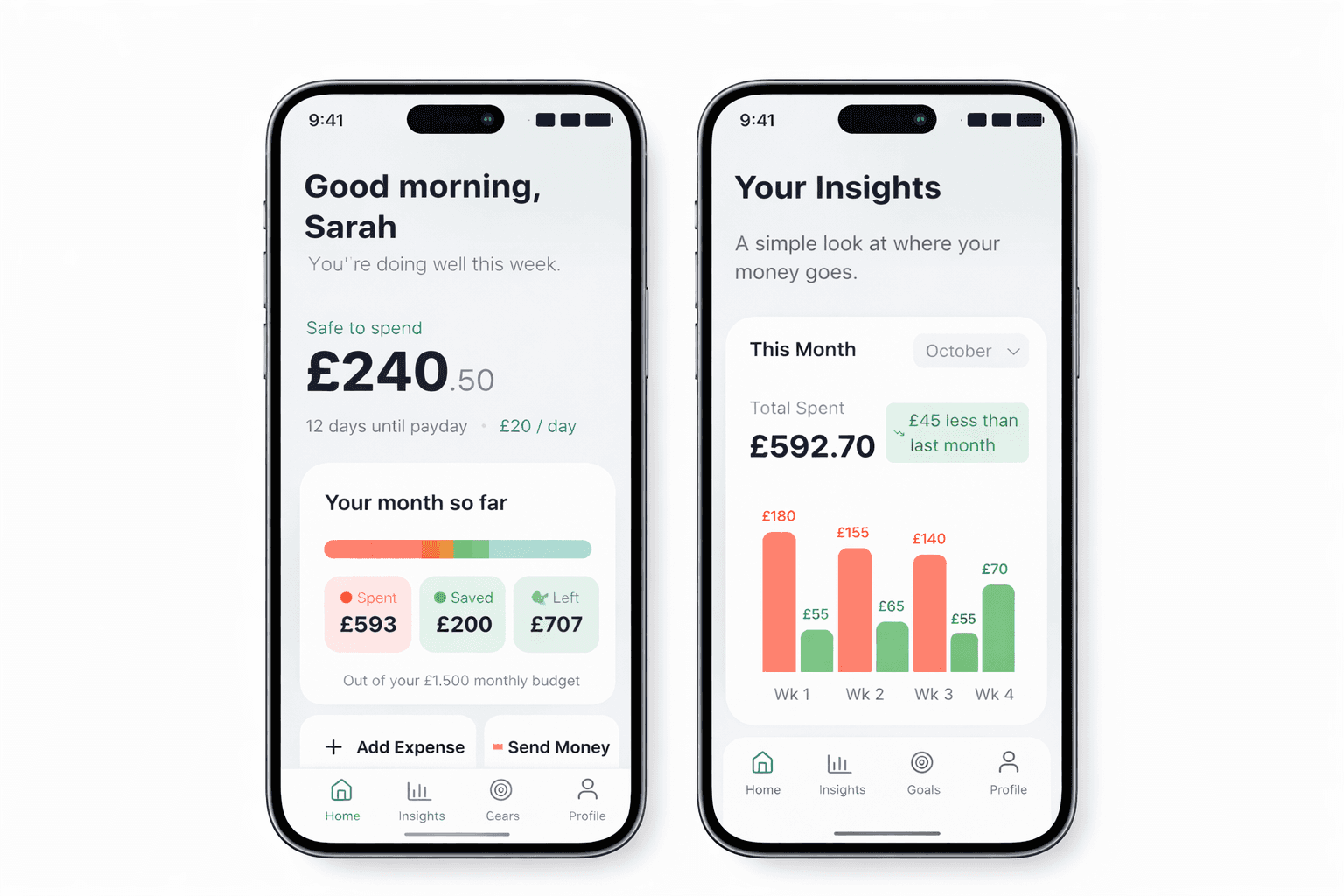
Clear is a mobile finance app designed to help young adults better manage their finances, reduce anxiety, and build confidence. This project also explores how AI-assisted tools can support the UX design process, enabling faster prototyping and iteration while maintaining a strong user-centred approach.
The Problem
Many young adults struggle with managing their finances, often feeling overwhelmed by budgeting tools and financial terminology. While existing apps provide detailed data, they rarely address the emotional side of managing money. This creates a need for a solution that focuses on clarity, confidence, and reducing financial anxiety.

The Role of AI
I wanted this project to focus on AI tools, such as Magic Patterns, and explore how they can support and enhance the UX design process.
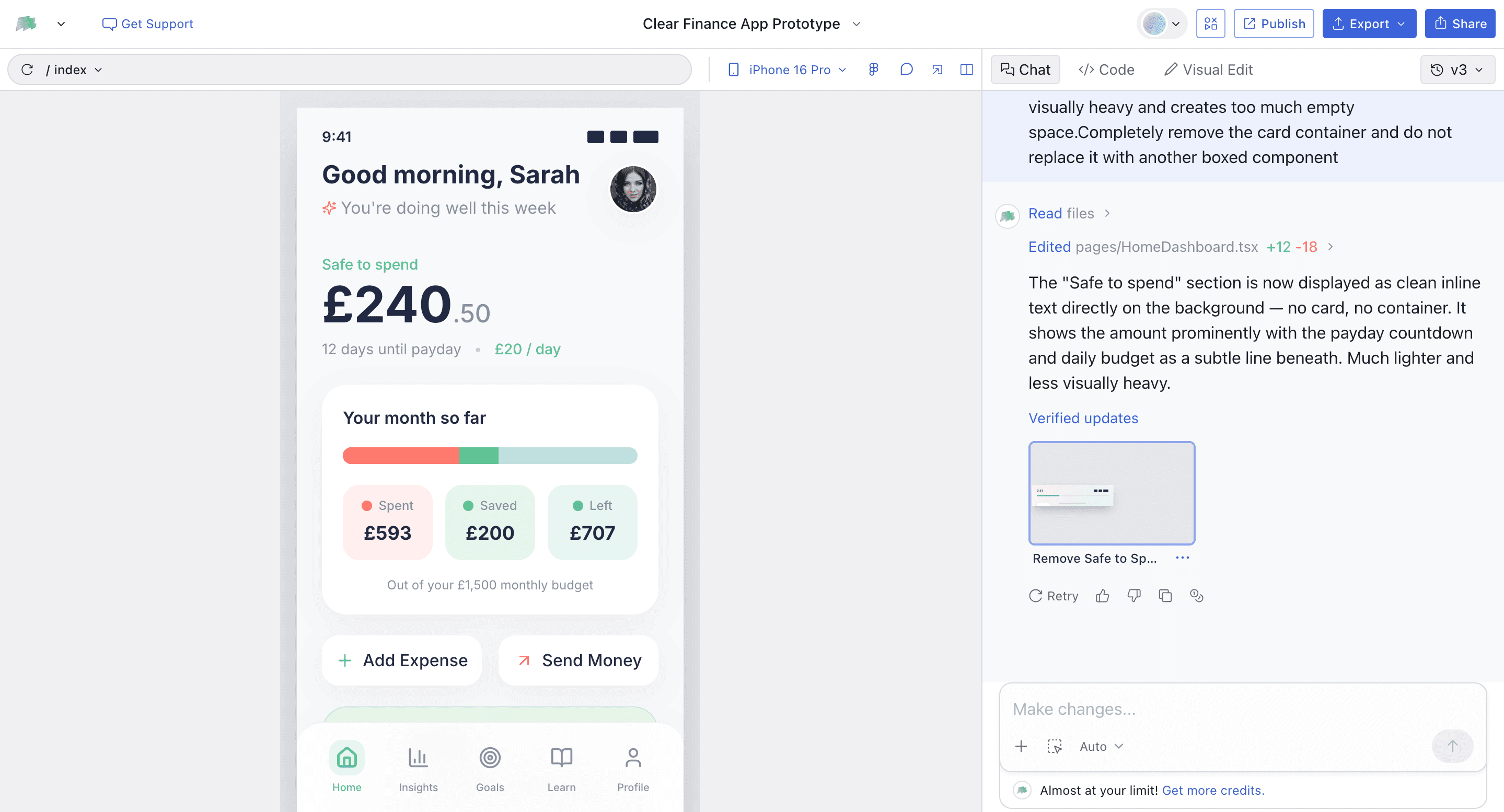
I used AI to rapidly generate high-fidelity prototypes, iterate on layouts, and explore multiple design directions in a short space of time. This allowed for a more efficient workflow, enabling me to focus more on refining the user experience rather than building interfaces from scratch.
In the context of Clear, this meant designing interfaces that simplify complex financial data into clear insights, while ensuring that any AI-driven outputs, such as spending insights or predictions, feel transparent and supportive rather than overwhelming.
This project reinforced the importance of balancing AI capabilities with human-centred design, ensuring that technology enhances the experience without removing empathy, clarity, or user control.
Design Development
Using AI-assisted tools allowed me to move quickly from initial wireframes to high-fidelity prototypes. Early low-fidelity concepts helped define layout structure, content hierarchy, and user flow, while AI enabled these ideas to be translated into polished designs almost instantly.
This significantly reduced the time typically spent on designing, allowing me to test and refine multiple variations of screens in a short space of time. The ability to make rapid, iterative changes meant that design decisions could be tested and improved in real time, rather than being fixed early in the process. This led to a more considered and refined user experience, where each screen evolved through multiple iterations to better support user needs.
Outcome
The final design delivers a clean, minimal interface that prioritises clarity and reduces financial anxiety. By combining simple data visualisation with supportive, approachable language, the app helps users feel more in control of their finances and more confident in their decision-making.
The integration of AI within the design process proved highly valuable, allowing for rapid prototyping and continuous iteration. This enabled me to explore multiple design directions efficiently and spend more time refining the overall user experience, rather than focusing solely on interface creation.
However, this project also highlighted the importance of maintaining a balance between AI efficiency and human-centred design. While AI supported the speed and flexibility of the process, meaningful design decisions were guided by user needs, empathy, and UX principles.
It reinforced that testing with real users remains essential to validate assumptions, ensure usability, and refine the experience further. AI can enhance the process, but it cannot replace the insight gained from genuine user interaction.
Next Steps
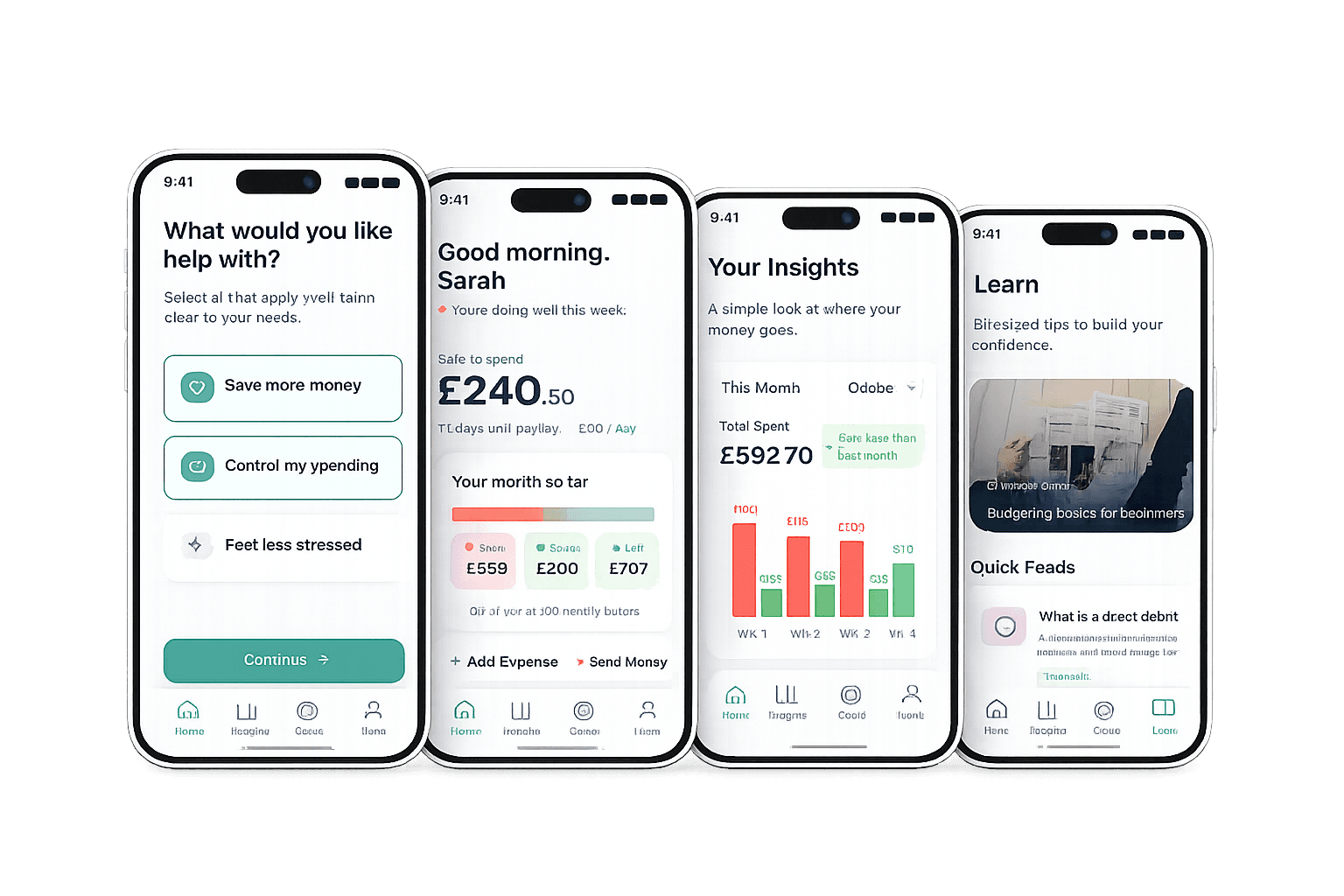
If this project were to be developed further, I would conduct usability testing with 3–5 users to evaluate how effectively the app supports budgeting tasks and reduces financial anxiety. These sessions would focus on observing user behaviour, identifying pain points, and ensuring key features such as “Safe to spend” and financial insights are clear and intuitive.
Based on the feedback gathered, I would iterate on the designs to improve usability and overall experience. AI-assisted tools such as Magic Patterns would support this process by enabling rapid refinement and exploration of updated design solutions, while ensuring that all changes remain guided by real user needs and insights.
Lucy Knox